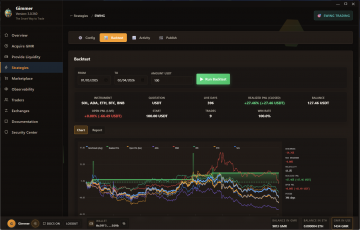
Marketplace distribution gets described badly when people turn it into an income promise. In Gimmer’s current product, it is better understood as a workflow: strategy builders can package a saved strategy for marketplace listing, and other users can inspect the details, use the Run backtest action, and choose from the listing’s rental plans before they commit.
What the Marketplace Is Actually For
The useful way to look at Gimmer’s marketplace is not “set it and get rich.” It is “take a strategy workflow that already exists in the product and make it easier to package, inspect, and distribute with clearer structure.”
That matters because trust in a marketplace does not come from hype. It comes from what each side can see before they act. Strategy builders need a guided way to prepare a listing. Renters need enough context to evaluate what they are looking at before they spend time or credentials on it.
What Strategy Publishers Configure
In Gimmer’s current flow, publishing starts only after a strategy has been saved. From there, the Publish tab walks the builder through three steps instead of dropping everything into a single form.
- Seller profile: set the seller name and a short marketplace description.
- Strategy details: review the locked listing GUID and strategy name, then refine the listing description.
- Plans & pricing: choose prices for the fixed marketplace durations.
The current UI keeps the plan structure explicit: 1 month, 3 months, 6 months, and 1 year. It also makes the final submission intentional by requiring a wallet password at publish time instead of treating marketplace exposure as a one-click side effect.
The publish guide also surfaces important operational requirements up front. The current implementation makes it clear that publishing depends on wallet access and environment-specific publishing prerequisites instead of treating marketplace exposure as a fire-and-forget action. That is the kind of detail a marketplace flow should expose early instead of hiding until the last step fails.
What Renters Can Inspect Before They Decide
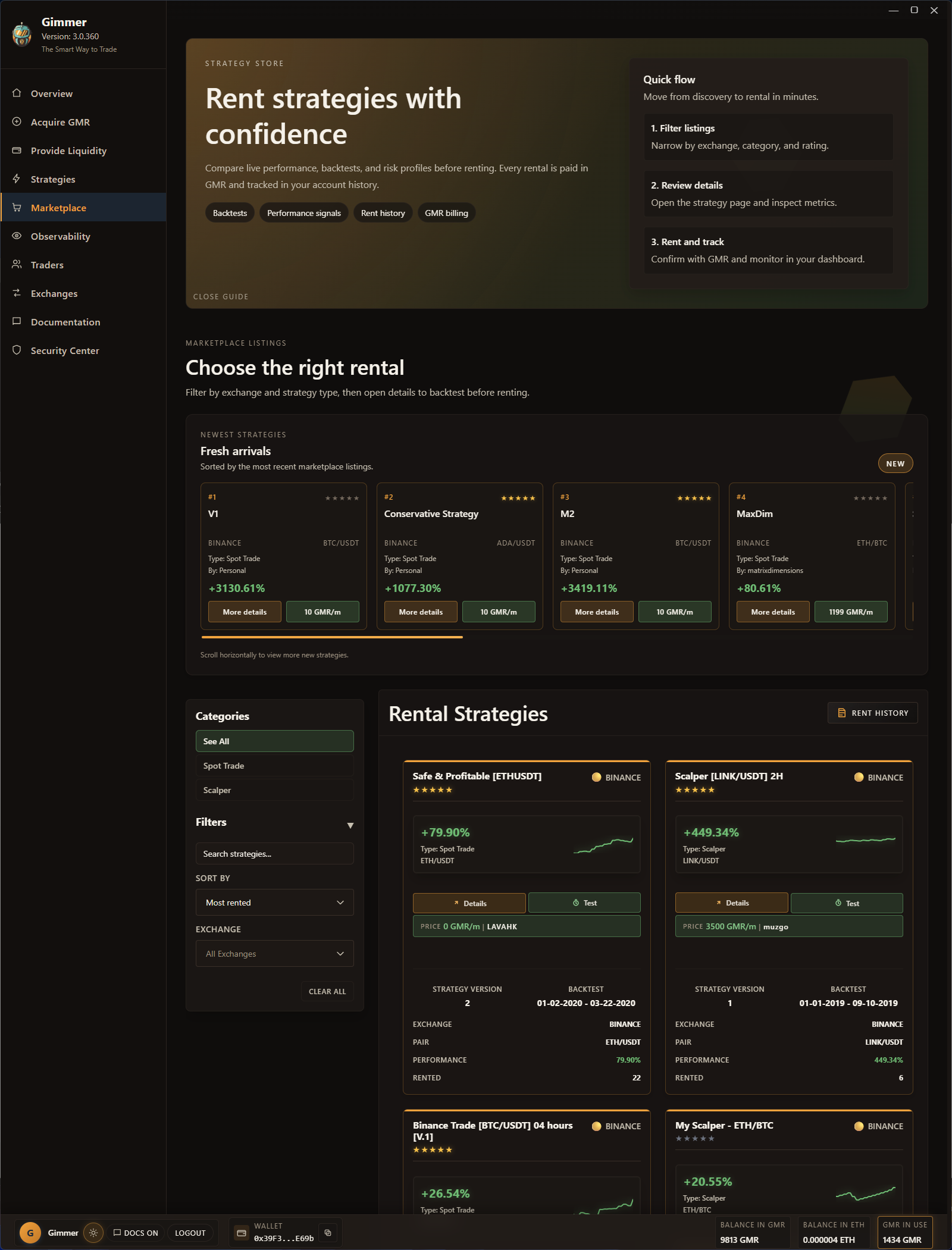
On the renter side, the marketplace is more than a title and a price tag. The browse surface is organized around a strategy grid, filters, and a newest bar, which makes discovery feel like an operational screen rather than a vague catalog.
Once a user opens a marketplace detail page, the current view gives them a more grounded picture of the listing:
- strategy name, type, exchange, and pair
- rating and performance context
- rental history and update timing
- seller identity and available rent plans
- a direct Run backtest action from the detail view
That is the right direction for marketplace trust. A renter should not have to commit based on marketing language alone. They should be able to inspect the listing, understand what kind of strategy they are evaluating, and compare options without guessing what sits behind the card.
Run Backtest Comes Before Commitment
One of the most practical marketplace details in Gimmer’s current workflow is the Run backtest action on the strategy detail page. That means evaluation is not limited to static listing copy or a simplified chart snapshot.
Instead, the product gives the user a way to open the backtest flow directly from marketplace discovery. In plain terms, that makes the marketplace more useful as a review surface. You are not just scrolling through names. You are using a workflow that helps answer a better question: is this strategy worth further inspection?
It is still not a guarantee of future results, and it should never be described that way. What it does provide is a stronger inspection loop before the user makes a rental decision.
What Happens When A Rent Is Submitted
The rent flow is also designed to be more explicit than a generic checkout button. The current marketplace detail surface requires a wallet password before rent submission, and the flow is built to surface status feedback after the request is sent.
That matters because transaction confidence is not just about success states. The current detail flow already makes the submitted state, pending confirmations, and failed-on-chain outcomes more explicit than a silent checkout form.
The current marketplace detail path also makes room for non-happy-path states that many products hide until they become support tickets. A listing can shift into waiting for admin approval, inactive, or a visible “you already own this marketplace listing” state. In those cases, the detail screen changes what the user can do instead of pretending every listing is instantly rentable.
Why This Workflow Framing Matters
Good marketplace messaging should reduce confusion, not create fantasy. If a strategy builder hears “passive income,” the risk is that they imagine guaranteed demand. If a renter hears “AI strategy marketplace,” the risk is that they imagine an outcome engine instead of a review workflow.
The more honest framing is narrower and more useful. Gimmer’s marketplace is a structured place to publish strategy metadata, expose plan options, inspect listing context, use the Run backtest action, and move through rent confirmation with clearer status feedback than a silent form submit.
That is still meaningful value. It just respects the difference between software workflow and financial promise.
Who This Is Best For
This marketplace workflow is a strong fit if you want to:
- turn a saved strategy into a structured listing instead of sharing it informally
- inspect marketplace strategies with more context before renting
- use the Run backtest action as part of marketplace evaluation
- work with publish and rent flows that expose more state instead of hiding it
It is not a guarantee of revenue for publishers or a guarantee of performance for renters. It is a clearer way to move through marketplace distribution and evaluation inside the product.
Final Thoughts
Gimmer’s current marketplace workflow is useful because it connects several steps that usually get separated: prepare the listing, inspect the strategy, use the Run backtest action, choose a plan, and track the transaction state with more clarity. That makes the marketplace easier to reason about for both sides of the exchange.
Want to see how Gimmer handles marketplace publishing and strategy review today? Download Gimmer and explore the Marketplace workflow inside the product.
— The Gimmer Team