In 2026, the biggest difference between a serious automation workflow and a marketing promise is not the size of the claim. It is whether you can inspect the strategy, validate how it behaves before going live, and understand what happens next when the setup changes. Gimmer’s current product direction fits that quieter standard: configuration, validation, review, and live execution as a later decision point.
Why Hype Is Not The Useful Signal Anymore
The crypto automation market is full of loud language: easy income, passive execution, AI magic, and claims that collapse risk into a single button. That language is easy to write and hard to trust.
For a trader or operator evaluating a bot in 2026, the more practical questions are simpler. Can you see what the strategy is configured to do? Can you test it before live use? Can you review the output without guessing? Can you change course without losing context?
Those are workflow questions, not slogan questions. They are also the questions that matter most once real capital, real time, and real accountability enter the picture.
What To Verify Before You Run Anything Live
A responsible automation flow does not start with blind activation. It starts with validation.
- Strategy definition: the logic, assets, and parameters should be visible enough to review instead of hidden behind vague labels.
- Historical validation: you should be able to run a backtest, inspect the result, and compare revisions before trusting the idea.
- Operational review: the workflow should make it clear what is pending, what completed, what failed, and what the next safe action is.
- Decision discipline: the tool should support iteration, not pressure you into treating one result as a guarantee.
That does not eliminate market risk. It can reduce avoidable guesswork.
How Gimmer’s Current Workflow Fits That Standard
Gimmer’s current product surfaces already support that kind of review loop across several shipped workflows.
For strategy builders, the product supports current Spot, Portfolio, and Script strategy flows. Once a strategy is saved, the workflow stays close to the work that matters: configuration, backtesting, activity review, and publication surfaces when marketplace distribution is relevant.
That structure matters because validation is not treated as a side tool. It is part of the main operating path.
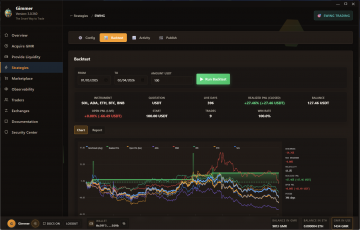
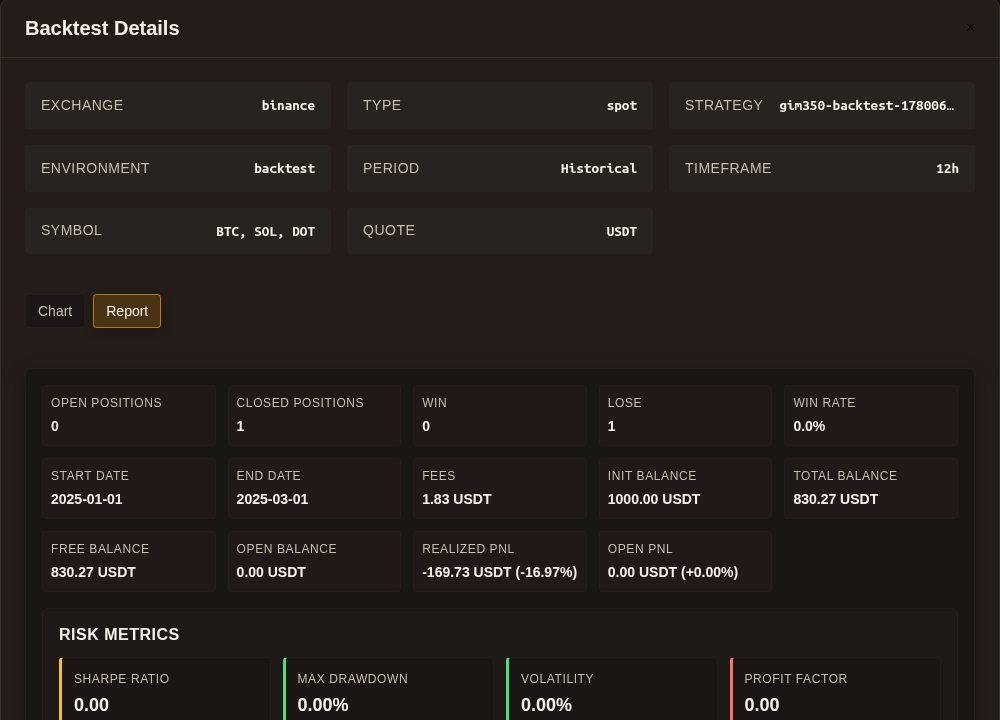
The backtest flow is one clear example. Instead of asking users to assume the strategy works, Gimmer gives them a dedicated place to run historical simulations, watch the run status move through the pipeline, inspect reports, and reuse what they learned in the next revision.
The Script strategy extends that same idea to custom logic. Rather than isolating code in a disconnected editor, Gimmer ties a TypeScript-based strategy editor to the same operational cycle: write the logic, configure the strategy, backtest it, review it, and refine it.
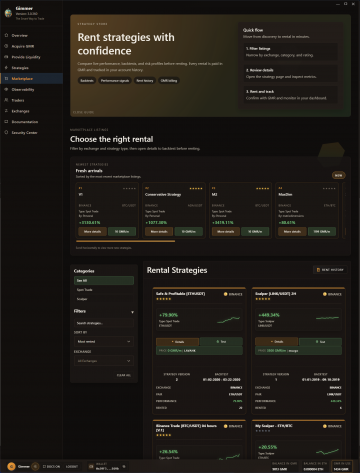
Marketplace discovery follows the same trust pattern. Users evaluating a strategy do not have to rely on a name alone. The current detail flow supports deeper inspection, including preview-mode backtests, before a user decides whether to move forward.
What Gimmer Does Not Promise
A disciplined workflow is not the same thing as a guaranteed outcome. Gimmer does not remove market volatility, and a clean backtest does not predict future returns. The honest value is narrower than that: a clearer way to inspect strategy logic and a more operational path to decide what deserves another round of testing.
That distinction is important because reliable tooling should lower ambiguity, not pretend uncertainty has disappeared. Users still need judgment, risk controls, and realistic expectations about how automation behaves in live markets.
It is also important to separate shipped product behavior from roadmap language. This article is about the workflows Gimmer supports today, not about every strategy concept that may appear in legacy material or future planning.
Final Thoughts
In a category crowded with promises, the more useful differentiator is often workflow integrity. Can you define the idea clearly, test it before live use, inspect the result, and keep iterating without losing track of what changed? That is the standard more automation tools should be held to.
Gimmer’s current product workflow is built around that standard: strategy setup, backtest-first review, operational visibility, and a clearer next step before live execution.
Want to evaluate a strategy with more discipline before it reaches a live market? Download Gimmer and start with one strategy workflow you can inspect, backtest, and review before considering live execution.
— The Gimmer Team